
From scattered evidence to a call your team can defend.
MAiPL reads the sources your team already uses, follows what changed, and shows the evidence behind every build, validate, or hold decision.
Connect what your team already uses
Jira, Google Docs, GitHub and uploaded PDFs. No new process, no migration — maipl reads the sources of truth you already keep.

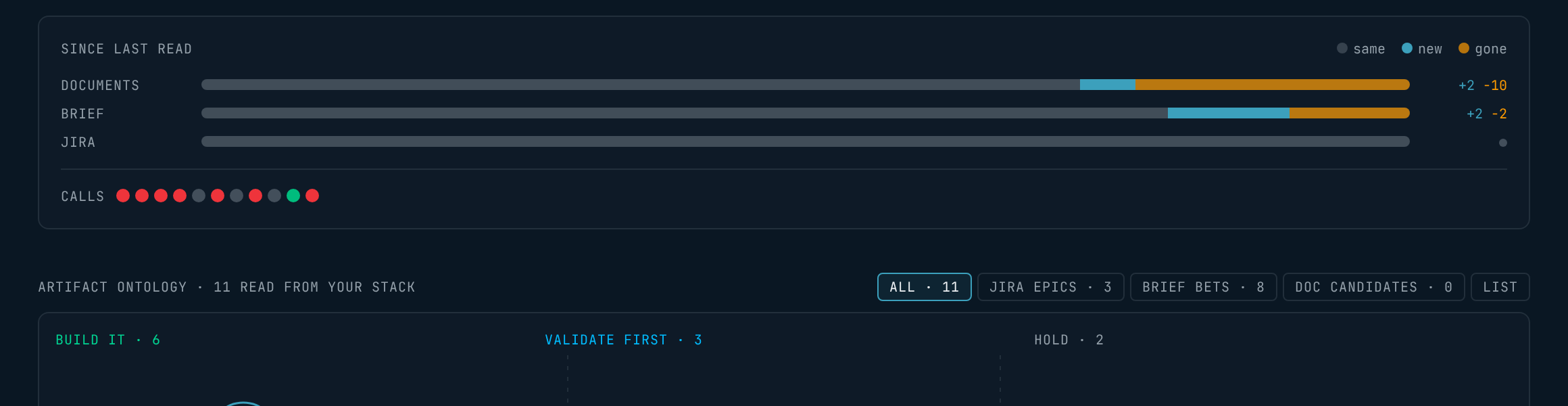
It reads only when something actually moves
Edit a doc, move a ticket — maipl notices and re-reads. Each run shows exactly which evidence is unchanged, new or gone since the last read.
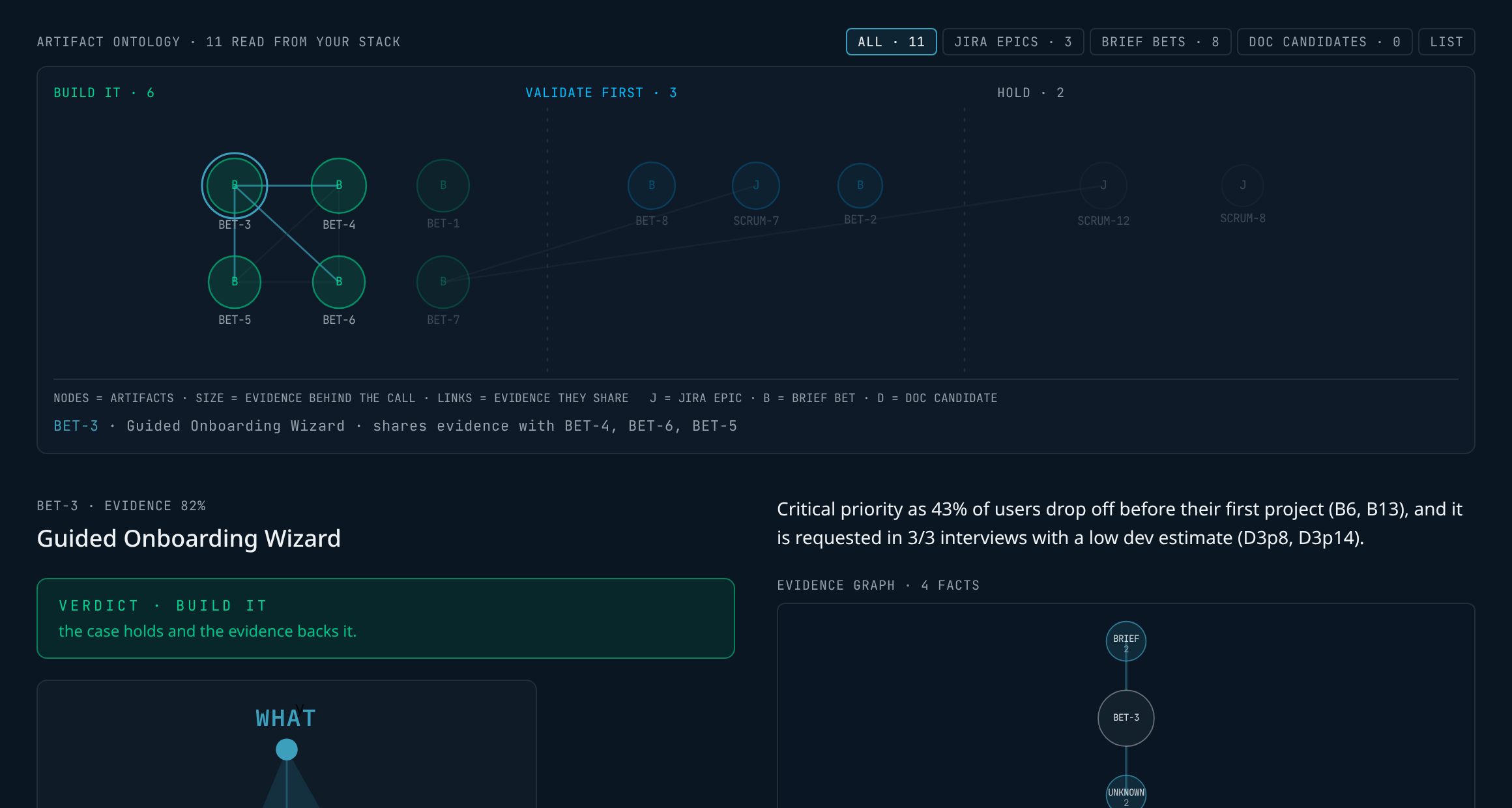
Every initiative lands in build, validate or hold
Not a backlog list. A map of everything read from your stack, sized by the evidence behind each call and linked where initiatives share the same facts.
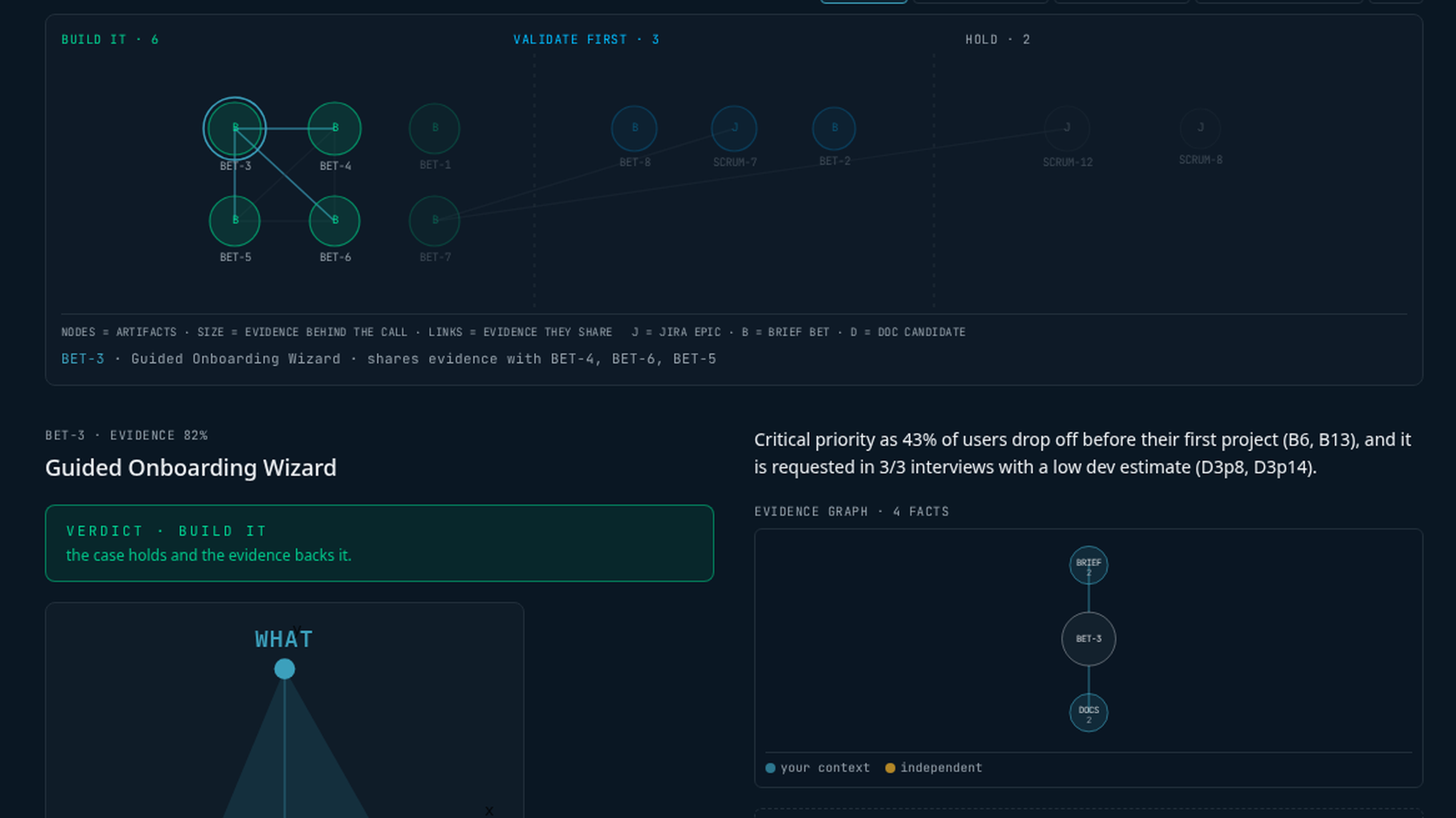
Each call shows its working
What should get built, how much it costs, why it returns — with the evidence percentage and the exact facts each claim came from.
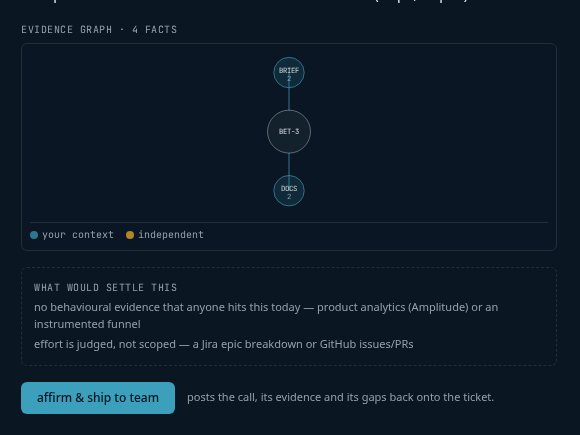
The decision goes back where the work happens
maipl names what evidence is still missing, then posts the call, its evidence and its gaps back onto the ticket when you affirm it.
From scattered signals to a call you can defend.
Signals become evidence.
maipl notices movement across your connected stack and turns it into cited facts.